Beef News

Zoetis and Select Sires Inc. partner to help cattle producers apply data for strategic decision-making

Zoetis and Select Sires Inc. partner to help cattle producers apply data for strategic decision-making 1200 801 Select Sires Beef

Data from Performance Livestock Analytics software and competitive grid  marketing access from GeneNet helps beef producers market the value of their cattle

PARSIPPANY, N.J. and PLAIN CITY, Ohio, February 1, 2023 – Zoetis and Select Sires Inc. are excited to announce their partnership to help cattle producers gain more from data. The partnership provides a grid marketing service, GeneNet, which will provide Performance Livestock Analytics customers a designated marketing platform to communicate and promote the value of their cattle. Select Sires’ farmer-owners will gain value with access to the Precision Animal Health portfolio from Zoetis, including beef genetic testing and Performance Livestock Analytics software.

The GeneNet grid marketing service negotiates fed-cattle pricing based on carcass characteristics including quality and yield grade. With this partnership, Performance Livestock Analytics customers will receive an exclusive offer to use GeneNet’s competitive marketing grids and gain bargaining power for the quality cattle they raise, plus carcass data on those cattle.

“This partnership creates a winning opportunity for producers,” said Justin Sexten, head of Industry and Network Partnerships, Precision Animal Health, Zoetis. “GeneNet allows cattle feeders to leverage their animal data from our management software to strategically market their investment in quality genetics and exceptional management. This information arms them with collective negotiation power on GeneNet’s marketing grids to communicate to buyers the value of their cattle.”

Cloud-based software developed by Performance Livestock Analytics, part of Zoetis, helps digitize cattle records and turn data into actionable insights to inform strategic decisions regarding health, genetics, marketing and financials.

Sandra Utter, GeneNet manager at Select Sires Inc., said the collaboration with Zoetis will help drive better genetic and management decisions to breed and market quality cattle.

“Because Select Sires is positioned at the front and back end of the beef production chain, we can help beef producers capture and analyze data that allows them to create, measure, manage and make changes to increase profitability from conception to consumption,” Utter said. “Data captured in Performance Beef can help us evaluate cattle performance in the feedlot and provides the necessary history and genetic makeup critical to successfully marketing on GeneNet grids.”

Through this partnership with Select Sires, Zoetis will begin the development of connecting the carcass data to the digital ecosystems for Performance Livestock Analytics and BLOCKYARD™ to enable more seamless management and genetics decision-making tools. This integration will provide participating customers access to valuable carcass data within their current platform for Performance Beef®. This will help minimize data entry and also provide producers insights into how their use of elite genetics is performing on the rail and adding value.

Select Sires customer, Trent Winter, of Wintergreen Farms in Clifton, Kansas, has benefited from marketing cattle through GeneNet. He emphasized the need for data to make good marketing decisions.

“Without the data, it’s hard to see the progress or know the areas to improve,” Winter said.

From the carcass data Wintergreen Farms received from GeneNet, they made sire selection adjustments to improve their cattle’s marbling ability and ultimately optimize both premiums and yields on the grid.

For Zoetis and Select Sires customers interested in learning more about competitive and profitable marketing opportunities for their cattle, visit GeneNetBeef.com.

Based in Plain City, Ohio, Select Sires Inc., is the largest global A.I. cooperative and is comprised of six farmer-owned and -controlled local organizations in the United States. As the industry leader, it provides highly fertile semen, as well as excellence in service and programs to supply dairy and beef producers with the world’s best genetics.

As the world’s leading animal health company, Zoetis is driven by a singular purpose: to nurture our world and humankind by advancing care for animals. After 70 years innovating ways to predict, prevent, detect and treat animal illness, Zoetis continues to stand by those raising and caring for animals worldwide, from livestock farmers to veterinarians and pet owners. The company’s leading portfolio and pipeline of medicines, vaccines, diagnostics and technologies make a difference in over 100 countries. A Fortune 500 company, Zoetis generated revenue of

$7.8 billion in 2021 with approximately 12,100 employees. For more, visit zoetis.com.
SELECT SIRES INC. ANNOUNCES NEW ENTERPRISE

SELECT SIRES INC. ANNOUNCES NEW ENTERPRISE 1733 1420 Select Sires Beef

Low Carbon Technologies will help farmers earn premiums for sustainability efforts

PLAIN CITY, Ohio, January 31, 2023 – Select Sires Inc. announces the creation of Low Carbon Technologies, LLC, as part of its farmer-owned cooperative. Low Carbon Technologies will serve beef and dairy farmers who are looking to document, verify and improve their operation’s carbon footprint and overall sustainability.

“Our farmers are looking for ways to both prove and improve how they are producing food sustainably. Through Low Carbon Technologies, we intend to be their partner in increasing the value of environmental stewardship to their operations,” said David Thorbahn, president and CEO, Select Sires Inc.

As part of its launch, Low Carbon Technologies is acquiring Low Carbon Beef, LLC (LCB). This cattle certification company enables beef farmers and ranchers to add value to cattle that are raised with less greenhouse gas (GHG) emissions. LCB is a USDA Process Verified Program (PVP) service provider and has the distinction of being the first PVP for calculating the GHG emissions for the beef production life cycle.

Colin Beal, Ph.D., founder of Low Carbon Beef, has been named CEO of Low Carbon Technologies and Chief Sustainability Officer at Select Sires Inc.

“LCB’s certification programs enable farmers and ranchers to earn premiums for reducing carbon emissions of their operation,” said Beal. “We are excited to develop Low Carbon Technologies with Select Sires given Select Sires’ long history of helping beef and dairy producers enhance productivity and profitability.”

Low Carbon Technologies’ science-based certification programs utilize a comprehensive life cycle assessment (LCA) to determine certification scores for candidate cattle based on management practices and cattle performance. The criteria in the current program span the “four F” categories of feed, fuel, fertilizer and cattle function to determine the life cycle greenhouse gas emissions of the cattle being evaluated.

Low Carbon Technologies will certify cattle regardless of the source of genetics. Longer term, the enterprise intends to expand sustainability assessments to other agriculture goods.

“Every day, farmers are taking action to be more sustainable,” said Beal. “Farmers and ranchers who produce cattle efficiently and with reduced greenhouse gas emissions, and the packers or processors who participate, deserve a premium for their efforts to improve the carbon footprint of beef products. Low Carbon Technologies provides third-party certifications that retailers, restaurant operators, and consumers need to make informed choices about their beef.”

JENNIE HARBIN JOINS BEEF DEPARTMENT

JENNIE HARBIN JOINS BEEF DEPARTMENT 1113 798 Select Sires Beef

Select Sires welcomes Jennie Harbin to the beef department as the cooperative’s beef marketing coordinator. read more

SELECT SIRES AND GAR CELEBRATE 3 MILLION UNITS SOLD

SELECT SIRES AND GAR CELEBRATE 3 MILLION UNITS SOLD 1200 764 Select Sires Beef

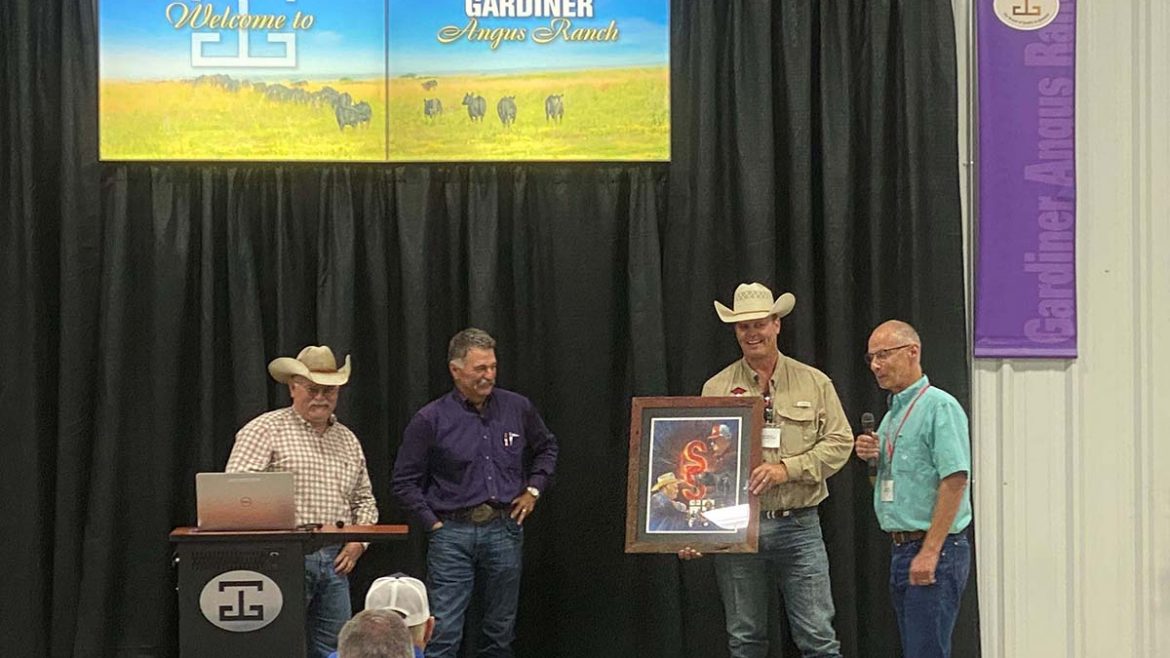
Nearly 90 Select Sires Beef enthusiasts visited Gardiner Angus Ranch (GAR) on Friday, September 10, 2021 for the final day of the 2021 Select Sires Beef Tour. Relationships Matter was the topic of the day and during the afternoon program at the Henry and Nan Gardiner Marketing Center, the Select Sires sales team was recognized for reaching an amazing milestone of three million units of GAR semen sold by Select Sires.

read more

Measuring the Select Sires Semen Fertility Advantage

Measuring the Select Sires Semen Fertility Advantage 150 150 Select Sires Beef

“Conception rate is the No. 1 profitability driver in anyone’s operation,” states Matt Perrier of Dalebanks Angus. When the seedstock operation looked at their own artificial insemination (AI) conception rate data, comparing semen used from four semen companies, they found differences they weren’t expecting.

Real World Data

Table 1. Difference in A.I. Conception Rates at Dalebanks Angus Compared by Semen Company
90% Confidence Intervals
Number of A.I. Pregnancy rate (%) Lower Upper
Select Sires 747 64 61 67
Company A 501 58 54 62
Company B 292 53 48 58
Company C (custom collection bulls) 72 57 47 67

In a comparison of 1,612 matings over seven breeding seasons (3.5 years), A.I. conception rates were compared. The data revealed a 6 to 11 percent Select Sires advantage over semen companies A, B and C. (See Table 1.) Perrier explains, “Before now, we had never looked at our data and made these comparisons. So, it’s very honest data and I think it’s worth talking about. I’d hate to make huge determinations off of a oneherd project, but looking at our data, it’s hard to argue this: The Select Sires bulls we used have shown they can get more females pregnant.”

An unbiased, third party sorted and analyzed the data according to individual sire and semen company. The statistical model used to analyze the data took into account the effect of year, season, age (cow vs. heifer) and technician.

It’s important for beef producers to be reminded that environmental and herd management factors greatly affect a herd’s fertility. The females in the study were managed the same at the Dalebanks operation near Eureka, Kansas. The heifer calves are developed on a fairly low to moderate nutrition plan postweaning. “A few years ago, we began this practice after analyzing research. Heifers are put on a moderate energy ration 30 days prior to A.I., vaccinated and synchronized with the 14-day CIDR protocol. After the second round of A.I., heifers are moved to native grass where they spend the rest of the breeding season with clean-up bulls.” The cows are also vaccinated before synchronization. Then, Perriers uses the Select Synch plus CIDR protocol, detecting heat through 72 hours post prostaglandin, followed by timed-A.I. breeding for those not detected.

Dalebanks Sire Selection Process

When making mating decisions, Dalebanks keeps their customers’ needs topof-mind, most of which are commercial cow-calf producers. They choose sires that are significantly above average for a variety of customer-demanded traits. “Calving ease, rapid early growth, optimal end product merit, docility and scrotal circumference are some of those customers’ top priorities. After that, we evaluate progeny phenotypes for traits like feet and leg soundness and udder quality. Reproductive efficiency of a sire’s daughters is a high priority, so we’ll continue to use that in our selection matrix, hopefully replacing anecdotal observation with more scientific genetic predictions in the future,” Perrier further explains.

When selecting A.I. sires, they search for high-accuracy, progeny-proven bulls, and begin that search using a 0.8 EPD accuracy search criteria for frontline performance traits such as birth weight, weaning weight and yearling weight, signifying presence of performance data. Then, from that narrowed search, they look at those with ultrasound and carcass records. “We will give more credibility to a bull that has carcass records, especially from a good data set, that fairly and equitably compared him well. We will also step out and use a moderately proven bull, but won’t use a bull that doesn’t have any progeny. It’s rare that we’ll use a moderate to low accuracy bull,” says Perrier.

Select Sires Semen Fertility Advantage

What’s a possible explanation for the difference in conception rates between Select Sires and semen companies A, B and C at Dalebanks Angus? Dr. Matt Utt, director of research at Select Sires, shares “If there’s one thing that gives us a fertility advantage, it would probably be our decision to throw away semen that doesn’t pass our tests and not send it to the field. If you want to maintain quality, the easiest thing to do is, if there’s any doubt on quality, do not put it into inventory.”

Measuring the Select Sires Semen Fertility Advantage Table 1. Difference in A.I. Conception Rates at Dalebanks Angus Compared by Semen Company 90% Confidence Intervals Number of A.I. Pregnancy rate (%) Lower Upper Select Sires 747 64 61 67 Company A 501 58 54 62 Company B 292 53 48 58 Company C (custom collection bulls) 72 57 47 67 By Dixie Russell Select Sires employs a rigorous multistep semen evaluation process and quality control system using the latest technology, assessing whether sperm can complete their job successfully. If the semen doesn’t pass all quality control evaluations, then it doesn’t get the Select Sires stamp of approval and isn’t placed into inventory for sale.

“A lot of the steps we take are under the umbrella of Certified Semen Services (CSS). Look for that stamp at the bottom of the straw of semen. In my mind, it’s a value-added indicator,” says Utt. Once a bull arrives at Select Sires, and his period of isolation is complete and he passes health testing requirements, semen is collected. Once collected, it’s prepared by adding antibiotics (as dictated by CSS) and extender. The antibiotics are an effort to mitigate the potential for disease transmission.

Extended semen is subject to several quality control evaluations after freezing. First, sperm motility is evaluated under a microscope immediately after thawing, using a warm water bath just as one would for breeding, and then again three hours after incubation in a warm water bath, which is called a thermal stress test. Second, sperm morphology (shape) is evaluated to determine if the sperm are abnormally shaped. An abnormally shaped head, midsection or tail of the sperm could lead to a multitude of problems, such as deterring the sperm from getting to the site of fertilization, embryonic mortality and others. Last, a flow cytometer is used to evaluate sperm viability (plasma membrane integrity) and DNA stability.

“Semen must pass all tests to go into inventory. If they don’t pass the tests, they go into the garbage,” says Dr. Utt.

Superior Settler™ Designation

Sometimes, a bull has outstanding semen quality and appears to also have above average fertility data from use in the field. When this happens, he is given the Superior Settler designation. Dr. Utt explains, “Having above average semen quality and appearing to have above average fertility gives us more confidence in making inferences about a bull’s fertility. Then, we can give the bull the above average designation of Superior Settler.”

As a reminder, all Select Sires semen passes the same semen quality tests. Dr. Utt equates the Superior Settler designation to getting an A+ grade (exemplary) versus a B grade (good, satisfactory).

Initially, Perriers didn’t pay a lot of attention to the Superior Settler designation. But, they do use it as a way to help choose A.I. sires. It’s not their first selection criteria, but it can help them refine their choices. When analyzing the same Dalebanks data, Superior Settlers achieved a 2 percent advantage in percent pregnant A.I. compared to Select Sires bulls without the Superior Settler designation.

More Industry-Wide Data Needed

“I think this data comparison opens the door to the possibility of a robust set of genetic predictions that can compare conception rates on A.I. sires. It’s one of the most economically relevant traits for anyone using A.I.,” states Perrier. “If the American Angus Association continues to get more adoption of MaternalPlus® and reproductive efficiency programs through AGI [Angus Genetics, Inc], we can hopefully find out the probability of a bull’s ability to get a female pregnant. But, more data needs to be submitted.”

Dr. Utt agrees that an industry-wide push would be needed to collect A.I. conception rate data in a consistent and standardized way to help develop fertility estimates.

Collecting data and improving conception rate will certainly go a long way in determining profitability in a beef producer’s operation.

™Superior Settler is a trademark of Select Sires Inc. ®MaternalPlus is a registered trademark of the American Angus Association.